
University of Gloucestershire
Name of partner
Description

The Countryside and Community Research Institute (CCRI), based at the University of Gloucestershire, is the largest specialist rural research centre in the UK, working at the interface of agriculture, society and the environment on issues relevant to rural and urban development, in the UK, Europe and further afield. Working with colleagues and partners in the physical as well as social sciences, the CCRI has placed itself at the centre of a nexus of mutual exchange. These exchanges range from soil science, sustainable agriculture, to the culture of food, and the limits of the food system.
Role :
The University of Gloucestershire contributes to EUROSION through the Countryside and Community Research Institute (CCRI), bringing established expertise in rural social science, participatory research, and citizen science. CCRI is leading Work Package 2: Creating a European Soil Erosion Monitoring Network, with responsibility for establishing, coordinating, and sustaining the network over the lifetime of the project and beyond.
Soil erosion is not only a biophysical process, but also a governance, knowledge, and practice challenge. UoG’s role within EUROSION focuses on how monitoring systems are designed, who they are designed for, and how they can function in real-world contexts. This will ensure that the project’s scientific and technical advances are socially grounded, inclusive, and usable by those most affected by soil erosion.
A core aspect of UoG’s contribution is engagement with a wide range of stakeholders across Europe, including farmers, land managers, agricultural advisors, policymakers, researchers, and citizen groups. Early in the project, UoG leads work to identify stakeholder requirements for a European soil erosion monitoring network. Through structured engagement activities, the team explores needs, expectations, and constraints, helping to shape a network that is relevant, accessible, and trusted across different regions and farming systems.
Citizen-led science is another central strand of UoG’s leadership within WP2. CCRI leads the co-design of citizen science approaches that support the monitoring network by generating field- and farm-scale observations of soil erosion. This work focuses on developing practical and proportionate methods that align with people’s time, skills, and everyday practices. Citizen-led science within EUROSION is intended both to complement scientific monitoring and modelling, and to strengthen soil literacy, learning, and engagement across society.
UoG also leads the co-creation and coordination of the European Soil Erosion Monitoring Network itself. This includes establishing shared governance structures, supporting collaboration between network members, and facilitating iterative co-creation cycles throughout the project. These processes bring together diverse actors and perspectives, reflecting variation in erosion processes, pedo-climatic conditions, and agricultural systems across Europe. Particular attention is given to long-term operability, including governance, data use, accessibility, and financial sustainability beyond the project.
In addition to WP2 leadership, UoG leads Task 5.2 within WP5 - Exploring land management and policy dimensions for reducing soil erosion, which focuses on developing recommendations for farmers and agricultural advisors. Drawing on monitoring data, modelling outputs, and stakeholder engagement, this work translates project findings into accessible guidance on management practices that can reduce soil erosion in different contexts. This supports practical decision-making and strengthens the link between evidence, advice, and on-farm action. UoG will also support WP8 by providing guidance on communication and dissemination as a separate area of expertise.
The University of Gloucestershire’s EUROSION team includes Work Package lead Dr Charlotte-Anne Chivers, alongside Dr Jane Mills and Dr Fern Baker. Together, the team provides the social science and citizen science backbone of the project, ensuring that EUROSION delivers a monitoring network that is technically robust, socially meaningful, and capable of supporting sustainable land management across Europe.

Dr Charlotte-Anne Chivers
Research Fellow leading WP2
Charlotte is leading WP2 and T5.2 for EUROSION. She is Research Fellow at the University of Gloucestershire’s Countryside & Community Research Institute, with over ten years’ experience in interdisciplinary social science. Her work focuses on participatory methods and co-design to support democratic environmental governance. She is involved in stakeholder engagement, dissemination and communication for various Horizon Europe projects, including SPRINT, MINAGRIS, TERRASAFE, TRAILS4SOIL and EUROSION, and oversaw co-design of a citizen-science initiative in the UK. She is an experienced qualitative researcher, applying mixed methods (interviews, focus groups, workshops, surveys and literature reviews) to explore soil health, water quality and farmer engagement. By working alongside farmers, community groups and policymakers, she aims to develop practical, evidence-based approaches that strengthen sustainable land use and environmental outcomes. Her favorite topic of research relates to soils, which is where life begins. She enjoys exploring decision making and governance around it, and how best-practice management of soil can be achieved.

Dr Fern Baker
Research fellow (postdoc)
Fern has a wide interest in the sustainability sector, but her main research area is the agri-food sector. Fern investigates how we can reduce greenhouse gas emissions from the industry, improve biodiversity and carbon sequestration, without impacting food productivity and security. She is also interested in the trade-offs and conflicts from implementing environmentally friendly measures, such as the economic, social, health and wellbeing impacts. Having a psychology background, Fern has a keen interest in environmental psychology, such as how we drive behaviour change and encourage people to adopt pro-environmental behaviour. Fern applies her psychology background throughout her work and co-produces research with those most impacted, such as the farming community.
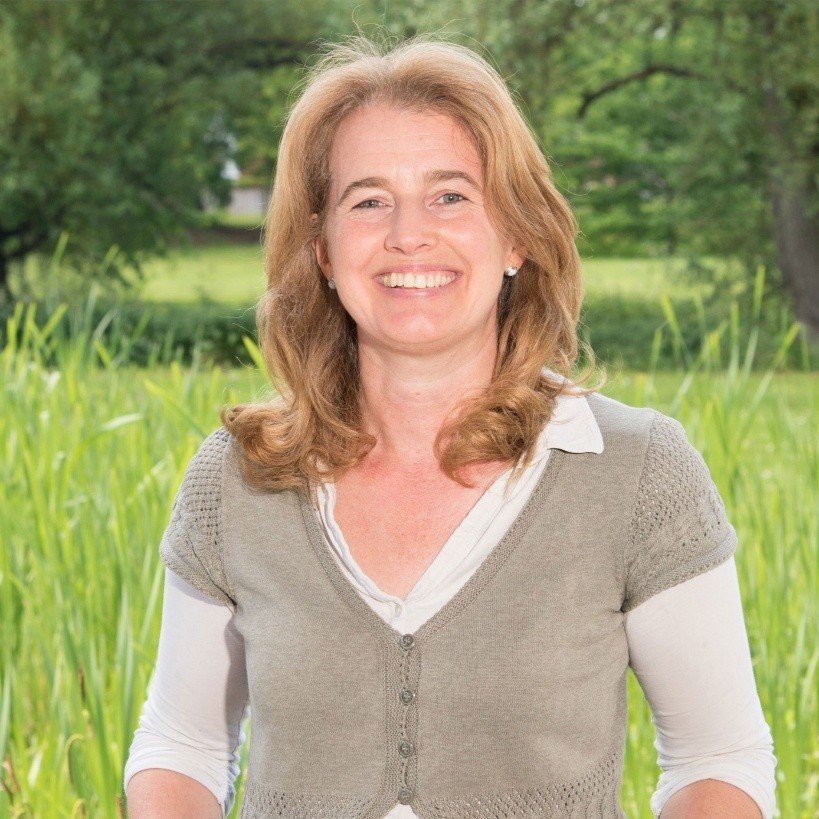
Dr Jane Mills
Associate Professor
Jane has over 25 years of experience in research at national and European level. She has developed a particular interest in understanding farmer behaviour in the context of agri-environment and sustainable agricultural practices. Her research also examines collaborative approaches and knowledge exchange processes which effectively reconcile agricultural production and environmental objectives. Jane’s main research interests focus on the social and behavioural aspects of agri-environmental policy, sustainable agricultural and environmental management.